
The first step to starting your photography business is to think to yourself, “Should I start a photography business?” The answer, interestingly enough, isn’t always yes and it frequently isn’t no. Even if you have a full time job and 3 kids under the age of 3, you can still start a side business doing whatever genre of photography you like.
My experience with starting a photo business began with me realizing that another year stuck in a cubicle without a creative outlet somewhere else in my life was going to send me to the crazy house. I’ve spent many months thinking about what it was that actually helped me feel ready to start my business. It’s not that I just picked up a camera one day and said, “I’m going to get paid to do this.” For those of you still on the fence about starting your business, or those of you looking for the right time or for the heavens to open up and send you a sign, let’s talk about a few indicators that may help you decide if you are ready.
Note: I say “doing photography” a lot in this article and I realize that sounds odd. That’s because photography is so much more than just taking pictures. It includes taking pictures, planning photo trips, learning through photography blogs/articles/magazines, watching photography tutorial videos, editing your photos, and much, much more. I just want to make sure we’re all on the same page about what constitutes photography.
You are doing photography when you should be doing something else
The point at which your hobby crosses over from something you do a couple nights a week to something you do when you really should be focusing on your TPS reports at work is a good sign you are ready for more. I drive my wife crazy with my long photo editing sessions that eat into dinner time, my boys’ bath time, or every other time at home. I find that editing photos is one of the most exciting parts of photography because I get to mold those RAW files into the thing I saw that was so amazing. It takes over my life. I find myself watching editing tutorials on my phone at my desk at work while I’m working on TPS reports and I’ll surf photography websites, blogs, and articles when I should be focused on something else (“My eyes are up here, Kirk!” -my wife, probably).
To me, this is a good sign that you’re past the hobbyist phase and ready to make the jump into a more serious relationship with your camera.
You are doing photography without getting paid (or paid very little)
The next sign is that you are already doing it just for the love of doing it, regardless of how much you get paid. My cousin has a fine art degree in photography but works in human resources. She offers her talents to friends and family to be a wedding/reception photographer. As far as I know (and I could be wrong) but she gets paid little or nothing for these jobs. She does it because she loves photography.
Many other pro photographers got their start shooting friend’s or family’s weddings, family pictures, senior pictures, etc for maybe a tenth (or less) of what the going rate is. They do it because they love being behind the camera. Many of us who chase sunrises and sunsets and won’t go on vacation without our tripod and wide angle lens know this feeling as well. We shoot landscapes just for us, not because we know someone will buy it. If a coworker loves the print you have hanging up at the office and wants to buy a copy, that’s just a bonus.
The reason I have this as a point in this article is because very few people who aren’t doing photography now will think they will start as soon as they pick up a camera. I bought the first generation GoPro and thought I was going to jump into doing adventure videos of ski trips and rides on my motorcycle. I was set to be a YouTube star. I made 1 video and then the GoPro sat in my cabinet for 2 years. People tend to like the idea of doing something more than they actually like doing the something. So if you are already doing photography, you are past a huge barrier already.
“Your true calling”
Has anyone ever told you that you are missing out on your true calling? If so, you might want to think about starting that business and sell them a print or two. I’ve turned my cubicle wall at work into my own personal art gallery and people stop by on a daily basis to talk to me about my photos (people I’ve never even met, too). I’ve had a few say, “I think you are missing out on your true calling” and “Why are you working here when you could be opening a gallery in Park City?”
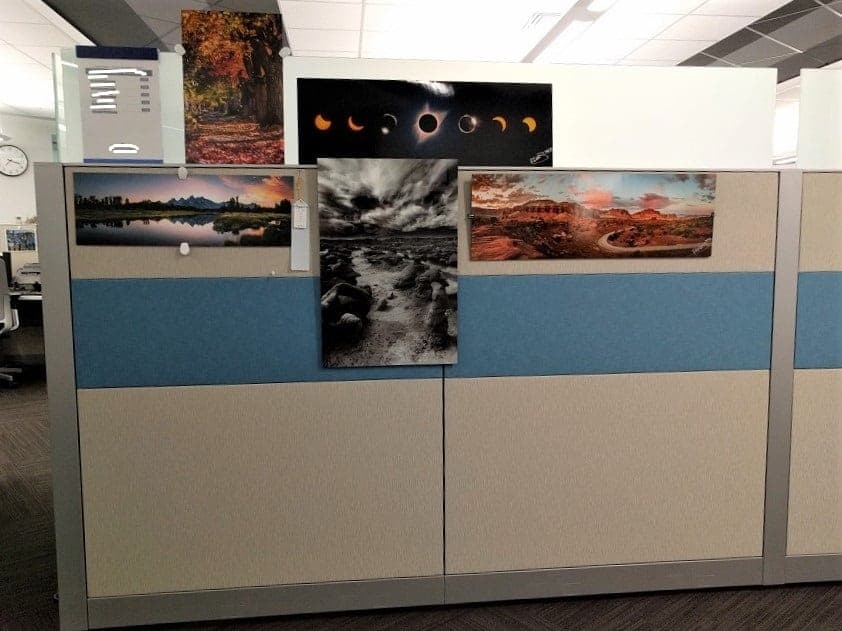
If you get more than just a few likes on Facebook and people are giving you genuine and unsolicited compliments, it might be time to turn your hobby into a business. After all, you’re getting attention, which is one of the hardest things to get in photography.
You’ve got significant experience doing photography
Many of us hobbyist-turned-professional photographers didn’t just hop into a business model after holding a camera for 10 minutes at the Best Buy model counter. It wasn’t until after years of experience that we decided we should probably start making some money off this adventure.
Experience will help you run a successful business because it makes you more adaptable. When Darwin talked about “survival of the fittest” he didn’t mean to say “the strongest of the species will survive.” Instead, “fittest” means the most adaptable. For example, when you see people offering photography tours or workshops, you can bet they probably have been to the locations on their tour route dozens, if not hundreds, of times. This experience helps to know what to do when there is cloud cover, rain, or road construction. This experience helps to know the best trails to take, the lesser-known vistas to shoot from, and the locals that will allow them onto their property. I couldn’t start a Southern Utah photography tour trip because I know next to nothing about southern Utah. Sure, I’ve been to Zion, Arches, and Bryce before but I don’t know them like the back of my hand. I would get several 1 star reviews because my lack of experience would make me a terrible tour guide.
Let’s pick bridals as our next example. Experience helps you adapt to the needs of your client. You’ll know how to light different face shapes and hair styles to make them look pleasing, how to pose different body shapes and dress styles, and how to work with natural light. You’ll know off the top of your head a few good locations when your client says “I want sunflowers” or “I want a waterfall.” A true professional won’t be fumbling around with shutter speeds and flash power while scrambling to get the last rays of sunlight because she planned this shoot too late in the evening and missed the best light. A good photographer already knows all this because she has shot 12 of her friend’s bridals without pay already, just because it was fun.
Another example of knowledge through experience is that you know that what your camera sees is not what you see nor what will turn out in the final print. You have the experience to know that you can turn this frame into something beautiful with a little bit of post-processing magic. I think many early photographers get discouraged with their photos simply because they don’t know how to process them to be amazing. This is another reason you should be heavily invested in learning all you can about post processing. Improve Photography Plus has great tutorials for every skill level at a very reasonable price.
One of the greatest things about experience is that you’ll know what you don’t know. Entry level photographers are like teenagers: they think they know everything. But experience teaches us all the things we don’t know about photography that we need to eventually learn one day. Experience keeps us grounded in reality by preparing us for the journey and prevents us from thinking we’ve already made it to the destination.
I can’t tell you how much experience you need in order to start your kitten photography business. Do you need to photograph 10 kittens? Or 100? I dunno. If you are just starting out, and your goal is to start a kitten photography business, you’ll have to make a concerted effort towards your goal. You can’t just photograph a couple kittens and call it good. You will need to put in the effort (more than you think you need) if you want to learn and gain the experience. What I can tell you is that experience comes in like a waterfall at first and then trickles in like a stream later. You’ll learn SO MUCH about your genre of photography in the first few months that you’ll be ready to start your business. And then you’ll learn little things here and there that will help you grow further and be even better.
You are willing to dedicate a serious amount of time towards it
Starting a photography business will take over your life. I mentioned in my last article how much of time sink it will become. You will miss out on family activities, you’ll have no time for your other hobbies, you’ll stay awake long into the night. That might sound exciting at first but believe me, it really grinds on you after a while.
Moreso than being able to make the mental dedication to starting a business you’ll have to actually have the time available to work on your business. Time is finite and we have to choose what we’ll do with it. Is your wife pregnant with your first or fourth child? If so, right now might not be the best time to try to start a photography business that will pull your attention away from your family. Are you finding that you are bingewatching Netflix or playing hours upon hours of Call of Duty Zombies? Then right now might be the perfect time to do something a little more useful with your time.
There was a time in my life where, for about 4 years, I did nothing. I went to work, came home, played video games for 6 hours, then went to bed. On the weekends I bingewatched House Hunters and Doomsday Preppers and rode my motorcycle around. FOUR YEARS and I don’t have anything to show for it. I didn’t do anything to better myself or my situation. I really regret all that wasted time. If your situation is like mine was and you’ve got more time than you know what to do with, consider starting up that photography business you’ve been thinking about.
You have something unique to offer
One of the first steps when going into business (any business) is to identify your Unique Selling Proposition (USP). This is Entrepreneurship 101. It is unlikely that you will have a successful business if you are offering the same thing as 10 other photographers.
Identifying your USP can be as easy as finding a niche you like working in. Maybe you really like photographing punk rock princess weddings. Or maybe your USP is destination senior portraits. Or perhaps your USP is your knowledge of an area.
Sometimes finding your USP is quite a bit harder, however. If you want to start selling your landscape photos, what makes them different? Why should I buy your prints of Arches National Park instead of any of the ten thousand that already exist? If I am a bride, why should I hire you instead of the 12 other wedding photographers in a 2 mile radius? I’ll tell you one thing, it isn’t because your ‘The Knot’ profile has more smiley faces than the next guy. 🙂 🙂 🙂
A great way to discover your USP is to take the feedback people gave you about your photography. What do they say about the experience shooting with you or the quality of the final product? What do they gush about when telling others about what it was like working with or buying from you? I realize that you can’t figure out your USP until you’ve actually had some practice with photography, which brings us back to my previous point of having experience already. You might have to shoot a few dozen bridals or senior portraits for free in order to start building up this experience which then leads to you discovering why people refer you and keep working with you.
Your USP is not your price and it isn’t because you use a certain type of camera, lens, or flash system. The overwhelming majority of times, a USP is based on the service and experience you give people. It is based on how you make people feel. Do you think people buy Mercedes because it’s better at getting from point A to point B than a Ford? No, they buy Mercedes because it makes them feel special. So what service are you going to provide that other photographers aren’t? What experience are you going to offer that other photographers aren’t? If you don’t have the answer, it’s important to spend some time figuring it out. Once you can answer the question, “Why should I hire you instead of this guy?” the hardest part of finding your USP is over.
You have the startup cash
Starting and running a business isn’t free. And most of the time it isn’t cheap either. Let’s assume you already have a camera, tripod, and lens. Next, you’ll need to register your business which will cost a few bucks (it’s actually not a lot, at least not in Utah). Next, you’ll need to buy a website or use a service to create it for you. I use Zenfolio and they cost about $220/year for the features I want. Next, you’re going to need to purchase some advanced training. All the YouTube videos in the world aren’t going to teach you the real nuts and bolts of the business of photography. Training is going to cost somewhere around $300-500 for a half decent course. Some courses just focus on shooting, others are all encompassing about every aspect of running your photography business. Next, you have to pay for some kind of marketing whether that be Facebook, Google Adwords, mailers, postcards, or a booth at a bridal show.
The fact is, registering a business is cheap. I think it was like $75 in Utah. Starting a business is quite a bit more expensive. When I started, I knew I was going to need something better than my Canon Rebel T2i. I had to buy a new camera and a lens to go with it. That was a significant purchase. The savings account kept draining from there as I realized I needed more help in terms of online courses, website services, and yes, more gear to produce the results I wanted. We’ve all heard the old addage, “You have to spend money to make money.” It’s all too true when it comes to starting your photography business.
For some advice on how to start your business if you don’t have bags of cash in the bank, check out this article by Aaron Taylor.
You are good at it
“If you are good at something, never do it for free.” -The Joker
Seriously though, if you are good at taking pictures of kittens, and people want to buy photographs of their kittens, you need to charge for it. Photography is a valuable marketing tool, it is a valuable memory tool, it is a valuable home/office beautification tool. Photography is so much more than snapping a few photos with your iPhone, despite what everyone who doesn’t know how to take a half decent wedding picture thinks. If you are good at it, and people are telling you that you are good at it, you should be charging for it.
If you are just starting out, your photos might not be that great. It may take years (probably will take years) to get to the point of having work people want to buy. But in 3 years when you look back at your journey, I promise you won’t regret improving your photography and starting your business instead of leveling up on Call of Duty or watching Gilmore Girls for the 4th time.
Conclusion
It’s too bad there isn’t a Magic 8 Ball you can jostle to get a direct answer on if you should start your photography business. But if you feel the pull to do something more with your photography and grow past the hobby phase, a business might be the next step for you.
A little bit of a legal warning, if you are charging any money at all for your photography services or products, you need to be set up as a business. Taking money under the table and outside of tax law may be convenient, especially if it’s only a few bucks here and there, but it is illegal and healthy communities are not built on people circumventing the laws, no matter how small they may seem. Besides, being able to call yourself “a business owner” has a nice ring to it.