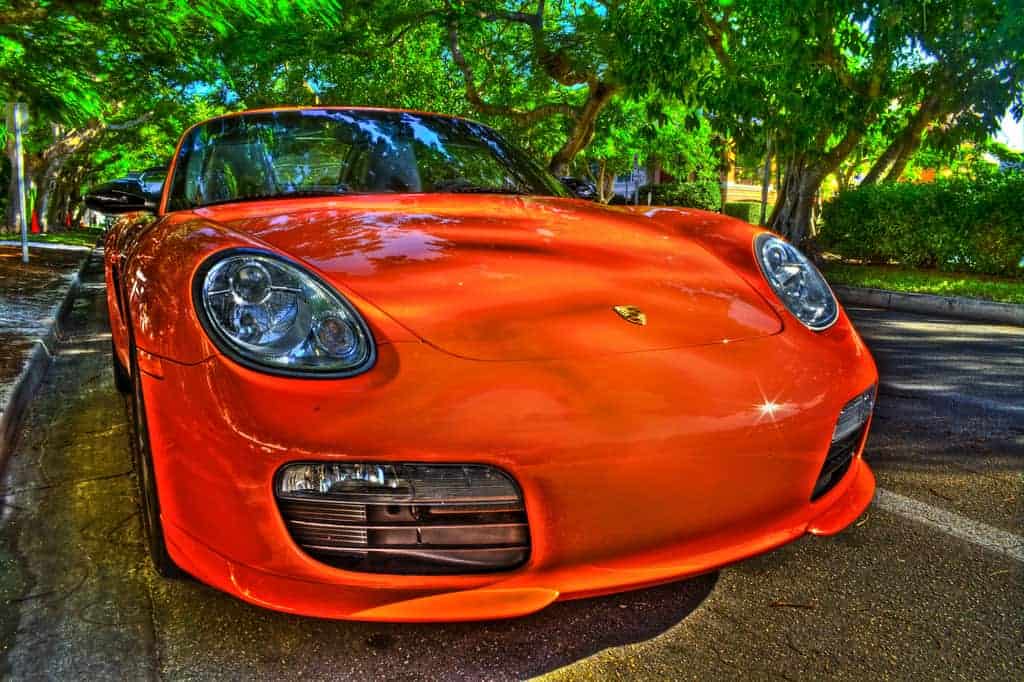
Snore! I've heard it before… people turn up their noses at my photography because I Photoshop my images. The ignorant remarks lack an understanding that there are extremely few professional photographers who don't use digital image editing techniques. If you're ever faced with these whiners, consider arming yourself with the following arguments.
First, no photograph is realistic. Was that sunset really that vibrant? No, the photographer changed the white balance in the camera to make it look more colorful. Was that lion really 3 feet away from the camera? No, the photographer used an extremely long lens to make the lion seem close to the camera. Was that football really frozen in mid-air while making that catch? No, the photographer used a fast shutter speed to freeze the action. You get the idea… everything photographers do is about creativity–not reality.
The natural response you will receive from this argument is “Well, those changes are made in the camera, not the computer!” How do you answer that? Repeat after me: “So what!” What difference does it make whether the photographer makes them in the camera (which really IS a computer) or on a desktop? None, really. What your opponent really means by saying you made the changes in camera instead of the computer is that it takes skill to make them in the camera, but not the computer. This is a good time to educate your foe about Photoshop. It takes several years for anyone to really master this program and is arguably just as difficult or more difficult than making in-camera changes.
No one would fault Leonardo da Vinci for making the painting of Mona Lisa more beautiful than she was in reality. Why then is it such a big deal for a photographer to do the same? No one would fault a painter for making up a landscape instead of painting an exact replica of a real landscape, but for some reason, people fault landscape photographers for doing the same thing. A photo frame is a photographer's canvas. Put in it whatever you choose.
Obviously, there are some types of photography that should not include image editing. For example, photojournalism. The key here is not to deceive the viewer because the photo is a part of a fact-dissemination effort. In this case, the antidote is transparency. If a news image is manipulated, the news organization is responsible for reporting the manipulation to viewers.
What do you think? Comment below and let me know if you think I'm wrong (or right).
There’s a fine line between enhancing a photo in photoshop and modifying it so much that it’s no longer a photo. In the example above you’ve done the latter. Sure you can use velvia or some other vivid color film to get that effect, or you can change some camera settings, but nothing is going to make your photo look like a painting straight out of the camera. Fast shutter speed, night shots, high iso, wide open lenses – all of those are artistic things you can do with a camera.
In post processing minor enhancements are acceptable, what you’ve done above is wrong.
Thanks for commenting! Let’s get a debate on the topic.
What about using digital tools to make art is “wrong?” This isn’t a news story. It’s art. Why does it matter how it was created?
I personally see nothing wrong with post processing an image.
Since our eye’s see in 3D, why would we want to view photo’s that are in flat 2D? The camera cannot see the image eactly, as we do, if it did, then there would not be a need for post processing.
Ever hear the expression, WOW, that picture look’s so “real”? Someone did one great post processing job, or simply tweeked it a little.
I went to a seminar, and the speaker was one of Ansel Adams former workshop instructors. He told and showed us
how Ansel Adams, would at times do this, to get exactly what he wanted.
Photography is a skill/art. Photoshoping is a skill. Just anyone can not sit down to a computer pop in Photoshop, and start doing all of these amazing thngs. It is very complicated, and takes a long time to get the chops to do it.
If a person want a “real” just walk up to a subject, pull out the camera and shoot it, no post processing of any type, go ahead, and see what is gotten. A flat boring photo.
We post process simply to make the image’s “pop” and more eye appealing. There is no right, or wrong, simply differences of opinions.
Bottom line is, everyone is not going to agree, however respecting others opinions is important.
Some simply tweek, some nothing at all, while some in my opinion, just go a bit overboard, for my taste.
“Wrong” John? Really?
I agree to a lot of what you have written. But we do not live in an ideal world, do we? There are always going to be 2 sides to an argument and this one is just that.
Im sorry but i totally agree with John on this one, Photoshopping has gone way too far…
We may not live in an ideal world hence the reason we shouldn’t even try to sell one, just look at the impact that it has on young girls…
Modell’s so photoshopped out that they dont even exist in real anymore and those are idol’s of billions of young girls who get’s anorexic cause “she looks so skinny on that ad”..
Good point, P.N. That can be true for Photoshopping models, but what about landscape photography or other fine art photography? Is that also unethical?
I do only adjustments myself like the lab’s used to, i do not modify however what’s on the photo. I think photography is about the moment and if that cant reflect the real thing our memory what we will leave behind will be faked all the way..
There’s a lot of new ‘art’ that based on photography now like HDR, but i’d more put that into digital art creation than photography. I can tolerate minor changes in a landscape photography but when people push it to extreme … i dont see the point of doing photography anymore in that case.
Good comment, P.N. That’s a worth-while justification for you to not do extensive Photoshopping.
Just keep in mind that photography IS art. Some people, like you, might enjoy it to record moments precisely. Other people may enjoy it to create new things and use their imaginations. Neither one is “right”, but I think it’s important to recognize that not all art has to be the same art that you (and others) enjoy.
Excellent comments, P.N. I think it’s interesting how divergent people’s opinions are on this topic. What kind of photography do you do? Are you a hobbyist or a pro?
Ick. I don’t like doing studio work, either 🙂 It’s so stale! Do you have your photography online somewhere?
I agree with you that photography is art and every artist has their vision. Some photographers are looking for perfect clean photos while others are looking to manipulate photos to achieve a certain effect. There is every extreme of this out there from the people who do absolutely no manipulation what so ever to the people who manipulate photos so much that they no longer appear to be photos any longer. As far as art is concerned everything is acceptable, there are no limits. The end result is the artists vision.
I don’t mind HDR’s or any other photoshopping tools to create the feeling or great imagery. What I do NOT like is when people try to pass along photos that been “shopped” as the real deal. Be honest about it. Yes this is a HDR, or yes I increased the blacks, contrast, whitebalance and exposure post process (or whatever else was done).
A picture is about to capture a feeling to catch the mood. Obviously if you can do that without doing any enhancing to the picture the more power to you. The other day I took a picture from my garage opening, it was a gray, cold and raining morning and very depressing. I was so “inspired” all I managed to do was shoot ONE picture. Later when I had time I imported it into Lightroom, picture came out perfect the sense of the mood was right there, grey and dull. Different shades of brown and gray dominated the picture. I added a little black and increased the contrast marginally to make the picture less flat but you felt it even on the original, I almost reset it but decided not to. Viewers felt the mood when they looked at it, one asked me why didn’t I “shop” it for a better mood. Well I didn’t because that WAS the mood.
On the other side, say my beach visit in Greece last year, I didn’t have a tripod with me, so had to lighten, increase exposure and fix the wb etc to give it the right feel. It was a warm, moon lit night on a deserted beach. Absolutely wonderful and I wanted to bring that out. Even if I had a tripod with me I don’t think I could have captured it without post processing.
There are three ways I think with photography. Capture it as it is (what most people to with snap and shoot cameras), capture the mood and feeling (“requires” a dSLR for aperture & shutter adjustments to catch the light), then you have the extreme mood/feeling shoots the artistic side where pictures are made into art (often requires serious post processing). Each to his/her own.
I used to balk at photo-shopped images because I expected photography to represent life. Then I became a photographer and realized that it’s an art form. It’s a personal creative expression and more often than not, focuses on conveying emotions. Enhancements or alterations can help accomplish that. When I look at an image now, it doesn’t matter whether the artwork was completed with a camera alone or with a computer program. All that matters is whether it appeals to me or not.
I completely agree with the original article. Among your list of unreal pictures that aren’t the result of Photoshopping, you could also have included long exposures, such as those 30+ second exposures that make rippling water look like glass or which make it look like clouds have been sprayed across the sky. Those pictures are very popular, but they certainly aren’t “capturing a moment”!
Photography can be divided into photojournalism (which Photoshop needs to be used judiciously) and art. For most of us photography is an art form and for this reason post processing to create a visually pleasing, if not stunning, photo is certainly the goal and all resources – composition, lighting, exposure and post processing are part of the art of photography. If you don’t believe this read Ansel Adams’ books. While he was a master at composition and seeing the light he was also a master in the darkroom. Few would argue his talent as a photographer and as an artist. Whether you use all the resources available in Photoshop or in the dark room the final product is the goal and if this is visually pleasing – that’s success! I can guarantee you that if Ansel were alive today he would be a master of Photoshop.
Nice! I really like that topaz look you have in your photo.
I’m not keen on HDR but will quite happily remove pylons from landscapes, enhance colour, contrast, brightness etc. Photojournalism should get nothing more than a WB correction and levels adjustment.
The treatment that advertising agencies apply to models is often way OTT.
I don’t do much photoshopping myself, but that is more because I don’t have the time. I also see plenty of photos that have been photoshopped so much that I don’t like them. But then there are plenty of out of the camera photos that I don’t like as well (I certainly delete enough of my own!).
At the end of the day, just do what you like. You can’t please everyone all the time.
I would like to know peoples views on post processing. Personally I do not agree with it at all. In my opinion a camera is a device to record an image of what the human eye sees. If its a dull day thats what the camera records. If you then post process the image and change it to look totally different then its not a true image. I have taken pictures that look flat and uninspiring because thats what my eye saw at the time. I have also taken pictures that look dynamic and have that wow factor because they were taken in ideal weather and light conditions. Without being disrespectful I think the public/ client is being fooled sometimes by photographers that post process their images. The skill to a good picture is the composition & if that can be combined with finding the correct light then the photographer deserves true praise. Non post processed and post processed pictures are like athletes that choose whether or not to use performance enhancing drugs. One is genuine and one is enhanced. I think it would be fair if all photographers declared whether they have post processed or not when submitting pictures for critique so that they can be judged accordingly.
@Martin
I happen to disagree. Our eyes don’t always function the way camera does. Our eyes’ DOF, speed, focal distance and latitude at times yield very different results than the camera’s.
I agree about judgment factors and that it’s better to declare what has been used
However, there are times when an artist has no ‘claim’ on his work to be original photo and is only focusing on art. In such instances there’s no point in expecting him to say what processes have been used.
Lovely car btw Jim;)
It’s popped out to the fullest degree
Great article and great debate going on here.
Personally I love HDR and all that it can bring to a photograph.
The human eye will always see more than the camera can shoot due to the dynamic range of the human eye and the lack on all camera of a high enough dynamic range.
One of the posts above suggests using film to pop the colours etc – we do that by vibrance in PS. Same thing just done digitally.
To the guy who doesn’t do anything but take the photograph consider this. A young bride who has a growth on her nose caused by cancer just before the wedding. She is going in for an op to remove the growth just after the wedding. What would you do? PS the growth out or leave it?
PS of models should not be allowed except for skin smoothing. No enlargements or reductions of waists, breasts etc. That is getting too much.
Landscapes NEED to be tweaked to get the best out of them. Dodging and burning a photograph is the same whether it is done digitally or with a bit of card and a wire in the dark room.
Andrew Miller
http://www.andrew-miller.co.uk
I have to say that I use Photoshop on every one of my images. Most of the time I take a final look at it and ask myself if it looks realistic. If not, I may go back in and alter the spots of the photo that I consider over the top. I agree with Andrew. Photoshop brings out the highlights and let’s you spotlight what you wish in a photo. You could say some people go overboard, but I consider photography art and this is just another way of seeing the world.