
Photographers working professionally often do much more than operate a camera and capture great photos. In many cases, when photographers have busy assignments, they must also organize multiple lenses, batteries, memory cards, lighting equipment and other accessories, as well as stay on top of very short deadlines. An organized system is essential for any professional photographer to avoid losing valuable time looking for misplaced accessories or trying to find missing equipment.
When working as a photographer at a wedding, business event, advertising shoot, or nature setting, being organized can make all the difference. Having a system for storing your gear, identifying it, and getting ready to use it will help you save time and focus on what matters most taking great photos.
Why Equipment Organisation Matters in Professional Photography
Photographers have to be prepared for the fast-paced nature of their work. For instance, when photographing a wedding, the photographer may have to take some indoor portraits, then transition to taking group photos outdoors, and finally photograph the reception. When moving from one of those events to the next, it is possible that the photographer will lose valuable time looking for items in their unorganized camera bag.
The proper arrangement of photography gear allows for immediate access to critical gear, reduces the likelihood of damaging gear unintentionally and prevents the mix-up of similar gear. Additionally, the proper organization of gear allows for easier cooperation among multiple photographers and/or their assistants who may be utilizing the same gear.
Photographers will find it especially beneficial to use an organization system during lengthy jobs because being tired and having limited amounts of time can lead to a greater chance of making errors. If you know exactly what goes into each bag or case, you can focus on composition, lighting, and timing rather than worrying about managing your gear.
Create an Equipment Checklist Before Every Shoot
When it comes to preventing problems with your equipment, preparation is probably the best thing you can do. Photographers who prepare for each job by creating a list of items needed for that particular job prior to going on location are far more likely to have everything they need.
A typical checklist can include:
- Condition of cameras and lenses: Verify the condition of your camera, verify how clean your lenses are, and verify that they can work together.
- Batteries/Chargers: Verify that all batteries are fully charged and that you have a backup source of power.
- Memory cards: Check for free space, and then format if necessary after you back-up your current files.
- Lighting equipment: Prepare flashes, reflectors, triggers, and necessary stands.
- Support equipment: Include tripods, monopods, and camera straps.
- Cleaning supplies: pack lens cloths, cleaning brushes, and all the other necessary maintenance supplies.
Photographers must also consider the weather, where they are going to shoot, and what is required for their job. If you're a landscape photographer, you may need to bring some type of protection from the weather and extra filters. An event photographer will probably focus on having another camera with him/her and extra batteries.
Using a consistent checklist for each project will help you develop a routine that can be relied upon, and minimize the risk of missing critical elements.
Organise Camera Bags and Equipment Storage
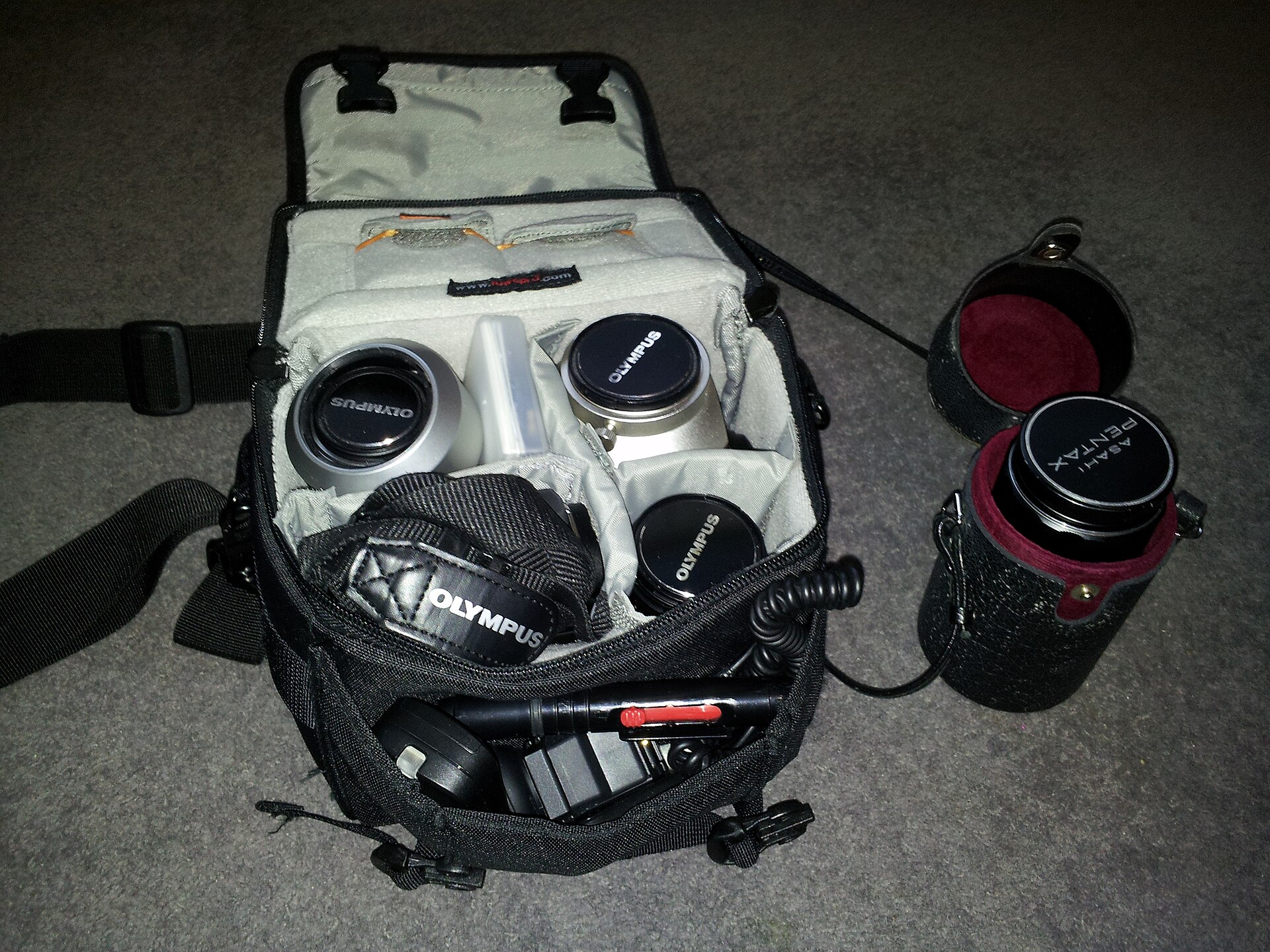
A camera bag should be used as a place to keep your equipment organized while you work on location. Camera bags are designed to provide organization and protection of your gear. The use of padded dividers in a camera bag allows the photographer to divide up the space inside the bag into distinct areas for each item being carried. For example, a photographer may use one section of the bag to hold their camera body, another section to store their lenses, and a third section to hold all of their smaller items such as batteries, memory cards, etc.
Equipment that is used often should remain accessible, but backup equipment can be stored in places where access is limited. For example, if you are a photographer working at an event, you will likely have your main zoom lens and an extra battery in a place that allows you quick access to both. However, any other equipment that you may use less often than those two items can be kept elsewhere.
Small accessory items require special consideration. Memory cards, lens caps, filters and cleaning cloths are easily lost when they are mixed in with other larger pieces of gear. Having a designated pouch or compartment with labels will allow you to organize your accessories so you don't lose them.
As well as avoiding overloading your camera bag, excessive weight can make it uncomfortable to carry around and increase the chance of you dropping your gear. You will find that selecting storage that fits the needs of your particular assignment will be more useful than taking all of your extra accessories.
Label and Identify Photography Equipment
Equipment Identification: Especially Important with Multiple Photographers, Assistants, and Production Teams When working in close proximity to other photographers, assistants, or production teams, equipment identification takes on added importance. Many different types of cameras, batteries, memory card cases, chargers and various other accessories look very much alike. This can result in equipment being confused with that belonging to someone else.
The problem of identifying what belongs to who can be solved by simple ways such as using a label, a color coded container for storage, an inventory number, or a small identification tag so that each photographer knows which equipment is theirs and which is communal or rented.
In addition to helping with identification, identification systems may be helpful for smaller photography groups to identify who does what on a team. For example, when you have many people working on the same job, it is easier for everyone to know which person is responsible for which part of the job if there are clear credentials. Credentials are the things that show you are allowed to work at a certain place or do a certain type of work. 4inlanyards provides products like custom lanyards and other identification accessories that can be useful in professional event settings.
The main thing is to make sure identification is clearly defined, easy to use and consistent. All labels need to be simple to read so that they do not interfere with how we handle the equipment or create too much extra stuff.
Manage Batteries, Memory Cards, and Small Accessories
Batteries and memory cards are some of the most likely items you will lose when shooting photos. Because these items are quite small, it is important for you to have a set system for storing your photography equipment.
A common way to keep track of your charged batteries versus your uncharged batteries is by separating them into different compartments or easily identifiable containers. When you have two different types of batteries (charged and uncharged) in separate areas, you can quickly find the battery you need. Additionally, photographers should never carry their loose batteries next to other metal items; those items can cause damage to the contacts on the batteries.
Memory cards must be kept in protective cases, not allowed to remain loose in a pocket or camera bag. Many photographers utilize labeled card holders to identify which cards are empty, and which contain images that require transferring and backing up.
After a shoot, files must be moved from the memory card to a secure location (such as an external hard drive) prior to formatting the card to use again. A consistent approach to this procedure will assist with protecting your most valuable images and prevent accidental file deletion.
Develop an Efficient Workflow for Busy Photography Shoots
Before beginning a photo assignment, plan out the sequence of events that will take place during the assignment and set-up your equipment based on those events.
A company photographer may have separate preparation areas for their portrait gear and their lighting accessories that are used to take pictures of groups. While the photographer is finishing one portion of a shoot, an assistant can get ready for the next part of the shoot.
Having a specific place to store items you use often will help you avoid spending time looking for them. When you are finished with an item, try to put it back in the location where it is supposed to go.
Photography teams also require clear handover procedures when equipment changes hands. Both parties must know exactly what was given to the other person, as well as if any of those items will be returned to a central storage location.
Protect Equipment During Travel and Location Changes
When you move from one location for photography to another, you introduce new risk factors. Your cameras and lenses are now vulnerable to impact damage, moisture, dust, and rapid changes in temperature.
Camera bags with protection, padded cases, and weather resistant coverings can decrease the risk of damage. It is important to secure all fragile equipment correctly, and the smaller accessories should be kept within closed areas during transit.
Outdoors photographers should think about the potential effects of weather conditions on their gear. To avoid any issues related to moisture, outdoors photographers may use rain covers, dry storage bags, and other types of protection for their gear.
Before you leave your current location, please take a moment to confirm that all of the equipment you need (cameras, lenses, batteries, chargers, etc.) has been packed. A small habit like this will help you avoid costly mistakes.
Use Digital Tools to Track Photography Equipment
Digital inventory systems can help photography companies keep track of their growing list of equipment, which can become increasingly difficult as they expand.
A simple spreadsheet will allow you to keep track of your equipment's name, serial number, when it was purchased, what maintenance has been performed on it, and who is currently using it. If you have a larger team, you might want to look into an application designed specifically for managing inventories, as these applications usually offer a way to track the usage of each piece of equipment and share record-keeping with other members of your team.
In addition to being able to use QR codes and digital labels to make links between physical equipment and the items in your inventory, scanning a code could potentially give you access to the item's details as well as allow authorized team members to update the item's status.
The recording of information related to equipment purchases, repairs, rentals and transfers among team members should occur every time an item is acquired by the team, repaired, rented, or transferred from one member of the team to another.
Final Thoughts
Organizing your camera equipment is a critical component to being a professional photographer. Good organization, storing things properly, clearly identifying everything, and having accurate records of what you own will help you minimize delays and damage to your expensive equipment.
These routines are especially crucial when working on difficult projects that require you to travel to many different sites, complete work quickly, and collaborate with many team members. Having a well-organized routine will allow you to focus less energy on finding gear and more on refining your skills as a photographer.