
Most of us learned lighting by fighting it. A window that throws hard shadows at noon, a reception hall with green fluorescent tubes, a bride who refuses to stand anywhere near the softbox. So it is worth paying attention when someone builds a set where the light has to be perfect for sixteen hours a day, on camera, with no chance to reshoot.
Live dealer studios are one of those places. They broadcast card and wheel games to viewers on phones and laptops, and the picture has to look clean, warm and readable at every moment. The way these sets are lit borrows heavily from portrait and product photography, and a few of their habits translate surprisingly well to our own work.
Why a Broadcast Table Is Basically a Product Shot
Think about what the viewer needs to see. Cards must be legible at a glance, chips need their colours to stay true, and the dealer’s face should look natural without shiny hotspots. That is the same checklist you run through for a jewellery shoot with a model’s hands in frame.
If you watch a stream from any live online casino, you will notice the table surface rarely shows a hard reflection. The felt is lit from above with large, diffused sources placed slightly forward of the dealer, so the light rakes gently across the cards instead of bouncing straight back into the lens. Product photographers do exactly this when they shoot glossy packaging: move the source until the glare falls outside the frame.
The other giveaway is consistency. A single camera angle might run all day, so the crew locks the white balance and avoids mixing colour temperatures.
Big Sources, Close In
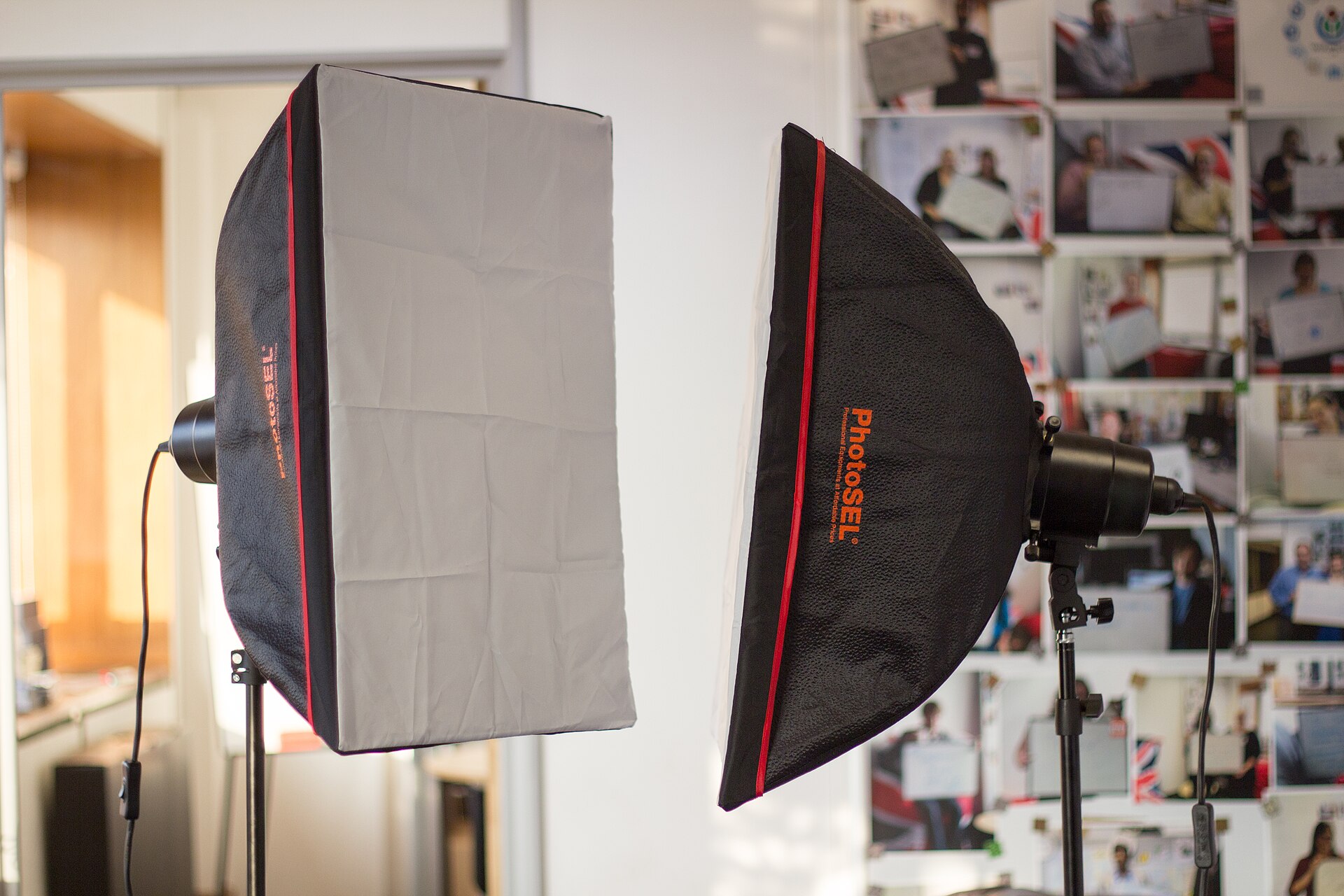
The faces on these streams look soft for a simple reason. The key light is large relative to the subject and sits close to it. Size and distance, not price, decide how gentle your shadows are. A cheap 120 cm octabox placed near your subject will beat an expensive small light pushed to the back of the room.
For your own portraits, try this:
- Place your key light as close as the composition allows, just out of frame.
- Feather it so the subject sits in the edge of the beam rather than the hot centre.
- Add a broad, low-power fill from the camera side to lift the eye sockets.
You will get the same even, flattering look without any post-processing.
Separation Without Drama
Dark backgrounds behind a dealer still show depth, and that comes from a modest hair or rim light. It is never strong enough to create a halo, just enough to draw a clean line between shoulders and backdrop. In portrait work, a rim light at about one stop under your key usually does the job.
Practical lights in the set, such as small lamps or LED strips, add atmosphere. Notice that they are dimmed well below the subject. A visible light source in frame should read as decoration, never as the brightest thing in the picture.
Colour Rendering Matters More Than Wattage
Broadcast crews pay close attention to how faithfully their lights render colour. Red chips and green felt look muddy under a poor LED, and viewers notice. For photographers this is the hidden spec worth checking before you buy panels. A high colour rendering index, ideally above 95, saves hours of skin-tone correction later. If you shoot video as well, look for TLCI figures too.
Respecting Regulated Spaces
One practical note if you are tempted to visit a studio or a physical gaming venue with a camera. These are tightly regulated environments, and photography is often restricted for security and privacy reasons. Regulators such as the UK Gambling Commission set strict standards for how games are run and recorded, so always ask for permission before you raise a lens.
Bringing It Back to Your Own Shoots
The underlying lesson is not about gaming at all. It is about designing light for repeatability. When you build a setup that looks right at 9 am and still looks right at midnight, you free yourself to focus on expression, timing and composition.
Next time you set up for a headshot day or a run of product images, take five minutes to lock your white balance, measure each light with a meter, and note the distances. Write it down. When a client calls back months later asking for matching shots, you will be able to rebuild the exact look in minutes rather than guessing your way back to it.