Street photography gear is changing because consumers are tired of carrying five pounds of metal just to capture a decent candid shot. You don't need a massive DSLR to take compelling photos in public spaces anymore. The industry is pivoting toward discreet, always-on capture devices that prioritize speed and software over heavy glass elements. This shift directly addresses the primary pain point of modern creators: friction. People want zero barriers between seeing a moment and recording it.
Photographers have debated gear for decades. We argue over sensor sizes. We argue over focal lengths. The truth is much colder. Most consumers do not care about the technical specifications of your lens setup. They care about the final image. They want immediate results. If a piece of equipment slows you down, it costs you money and missed opportunities. Bulky setups draw unwanted attention in urban environments. You become a target. You become a spectacle. Lightweight, wearable tech eliminates that friction entirely.
The aesthetic is shifting. We are moving away from heavily staged, technically perfect street portraits. The modern audience demands raw, unfiltered reality. They want the grit. They want the blur. They want the exact perspective of the person living the moment. Traditional cameras put a wall between the operator and the subject. Wearable tech tears that wall down. You are no longer an observer. You are an active participant in the scene you are capturing.
What is driving the shift in modern camera equipment?
Data answers this question better than any subjective opinion. The wearable camera market is expanding rapidly because it solves actual problems rather than inventing new ones. Enterprise and consumer demand are both pulling hardware manufacturers toward smaller form factors. Consumers vote with their wallets. The votes are definitively in favor of convenience.
The global market for wearable cameras was valued at US$ 12.15 billion in 2025. You cannot ignore that kind of financial momentum. It dictates where R&D budgets go. When money moves, technology follows. The days of incremental updates to heavy camera bodies are ending. Manufacturers are pouring capital into AI-assisted image processing, miniaturization, and cloud connectivity.
Consider the regional breakdown. North America held a 39.5% market share in 2025 for these devices. This represents massive adoption across both consumer lifestyle segments and professional enterprise applications. First responders use them. Content creators wear them. The lines between professional documentary equipment and consumer electronics have completely dissolved.
Why? Because the software fixes the hardware's physical limitations. Tiny sensors used to mean terrible low-light performance. Shadows turned into muddy messes of chroma noise. Now, computational algorithms clean up noise before you even preview the file. You shoot. The processor computes. The image is ready.
This market isn't slowing down. Projections indicate the overall wearable camera industry will reach USD 38.91 billion by 2035. Growth of that magnitude changes the entire ecosystem of photography. Accessories adapt. Workflows change. Storage solutions pivot to cloud-first models, rendering local hard drives obsolete.
How do you build a practical gear kit without overspending?
Stop buying things you don't need. The photography industry survives on convincing you that the next lens will make you a better artist. It won't. You need functional tools. Nothing more.
A proper road trip photography kit requires ruthless editing. You cannot bring everything. You should not bring everything. Weight is the enemy of creativity. When your shoulders hurt, you stop looking for angles. You just want to sit down. You stop taking risks. You settle for the easy shot from the sidewalk because climbing the stairs requires too much effort.
Build your kit around these principles:
- Limit yourself to one primary focal length for street work.
- Carry a discreet backup device.
- Invest in high-capacity, reliable storage rather than redundant lenses.
- Prioritize weather-sealed gear if you shoot outdoors constantly.
- Keep power sources standardized.
You don't need a tripod for street work. They are cumbersome. They ruin the spontaneity of a scene. They announce your presence to everyone within a two-block radius. You want to be invisible. A tripod is a neon sign that says "I am taking a photograph, please act unnatural."
Practicing your street photography skills means learning how to blend into the environment. A massive 70-200mm lens screams "tourist" or "creep." People act differently when they see a big lens pointed at them. The moment is gone. Authenticity evaporates. They freeze. They stare. They look away.
Small primes work best. F/8 and be there. That is the old adage. It holds up. Zone focusing with a wide-angle lens allows you to shoot from the hip without waiting for autofocus to hunt for contrast. You pre-set your distance. You calculate your depth of field. You press the shutter when the subject enters the zone. It requires practice. It delivers results. Speed beats precision when the subject is fleeting.
Why are wearable devices taking over market share?
They are frictionless. That is the entire secret.
You don't have to unzip a bag. You don't have to remove a lens cap. You don't have to raise a device to your eye. The camera is just there, seeing what you see. It eliminates the cognitive load of operating machinery. You stop being an equipment operator and start being a purely visual observer.
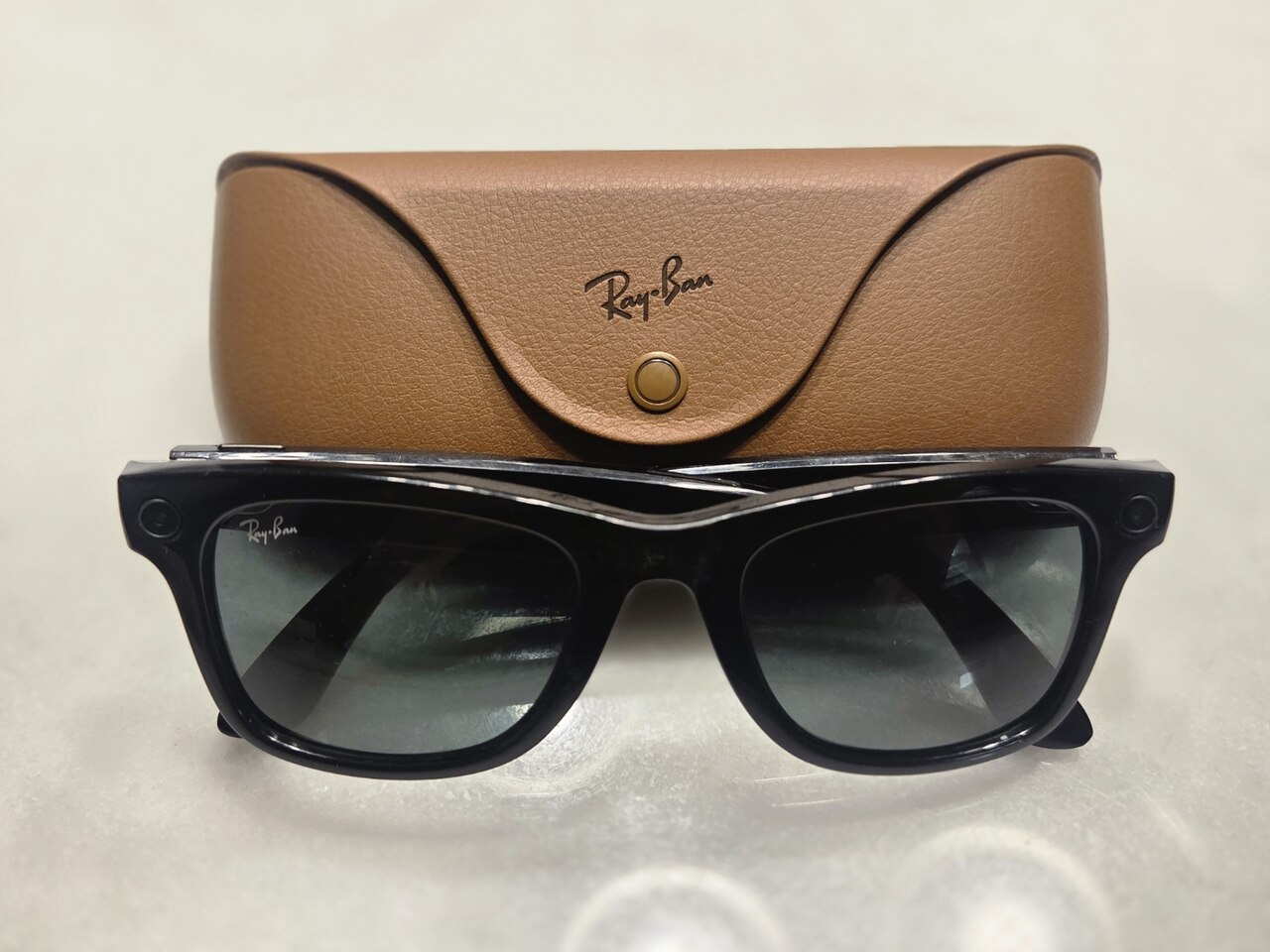
Within this category, specific form factors are dominating the revenue streams. Ear-mounted, clip-on, and body-worn cameras all serve distinct purposes. But AI glasses with cameras are seeing aggressive consumer adoption. In fact, this specific tech-eyewear segment held a 41.5% revenue share in 2025 within the broader wearable camera market. Consumers are speaking loudly. They want tech integrated into their apparel.
People already wear glasses. Adding a camera to an item you already have on your face requires zero behavioral changes. That is a marketer's dream. You don't have to train the consumer. You just upgrade their existing habit. You take a mundane object and inject it with capability.
The hardware is getting stealthy. Early iterations looked ridiculous. They were bulky. They had glowing red lights that made users look like cyborgs. Society rejected them. The current generation looks like standard eyewear. They blend in. They don't scream "technology."
Battery life remains the primary bottleneck. Physics is annoying that way. You can only pack so much lithium into a tiny frame before it gets too heavy or overheats. But manufacturers are mitigating this with aggressive power management software and charging cases that double as protective storage. The tech is catching up to the ambition.
Where do you integrate modern optical tech seamlessly?
You wear it. You forget about it. You let the device do the heavy lifting.
If you want to capture POV footage of your urban explorations without drawing a crowd, you need equipment that doesn't look like equipment. You might consider looking into AI glasses with a built-in camera. They sit on your face. They record from your exact perspective. They upload directly to your paired device. No memory cards. No cables. No waiting.
This is the reality of modern content creation. The audience craves first-person authenticity. They want to feel like they are walking down the street with you. Holding a phone at chest height is awkward. Strapping an action camera to your chest looks absurd in a coffee shop. Eyewear solves the aesthetic and practical problems simultaneously.
The integration of artificial intelligence in these devices handles the exposure calculations. When you walk from blinding sunlight into a dark subway station, traditional cameras require manual adjustment or a second of metering calculation. AI-assisted processors predict the exposure shift and adjust instantly. You don't lose the highlight detail. You don't crush the shadows.
It is a tool. Treat it like one.
Use it for behind-the-scenes footage. Use it to document your scouting trips. Use it when you are in environments where a traditional camera would be flagged by security. It is not replacing a medium format studio camera. It is replacing the camera you used to leave at home because it was too annoying to carry. That is where the real value lies. The best camera is the one you actually have running.
What is the real impact on visual aesthetics?
Technology changes how images look. It always has. The transition from film to digital eliminated grain and introduced pixel noise. The transition to computational photography is eliminating optical imperfections entirely. We are entering an era of synthetic perfection.
We are seeing hyper-realism. Edge-to-edge sharpness that physics shouldn't allow from tiny plastic lenses. HDR processing that perfectly balances a bright sky and a subject in deep shadow. Some photographers hate it. They say it lacks soul. They say it looks artificial.
They are missing the point. The audience doesn't care.
The masses consume images on six-inch screens while waiting for a bus. They want punchy contrast. They want bright colors. They scroll past subtle optical nuances at the speed of light. They reward impact over technical pedigree. If an image doesn't arrest their attention in half a second, they are gone.
If you want to stand out, you have to master the rules of composition. An AI processor can fix your exposure. It can balance your white point. It cannot fix a boring subject. It cannot create leading lines where none exist. It cannot determine the decisive moment to trigger the shutter. The framing is entirely on you.
Composition is your only remaining differentiator.
- Use contrasting elements to force the eye where you want it.
- Frame subjects within natural structures.
- Break the rule of thirds deliberately, not accidentally.
- Understand color theory and how opposing colors create tension.
- Anticipate movement and position yourself before the subject arrives.
The machine handles the math. You handle the emotion.
When everyone has a perfect camera on their face or in their pocket, technical perfection loses its value. It becomes the baseline expectation. A technically flawless but boring image is still a boring image. You have to provide perspective. You have to show the viewer a slice of the world they failed to notice.
You find a chaotic scene. You organize it within a frame. You press the button.
The gear you use to do that is just a means to an end. Choose the tool that gets out of your way. Let the tech nerds argue about sensor crops on forums. You go outside. You make the work. The market rewards output, not theoretical arguments about hardware purity.